The financial regulator dropped investigations and lawsuits against several crypto companies following Gensler's departure.

Crypto News
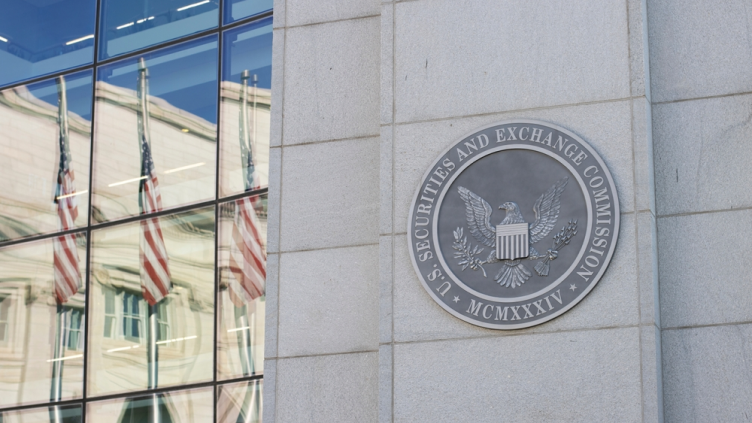
The Securities and Exchange Commission has implemented significantly fewer enforcement actions under Chair Paul Atkins compared to the previous administration led by Gary Gensler. Consulting firm Cornerstone Research reported the decline in a Wednesday analysis covering fiscal year 2025 data.
Enforcement actions against public companies and their subsidiaries decreased approximately 30% in fiscal year 2025 under Atkins' leadership compared to fiscal year 2024. Cornerstone stated the data is consistent with general patterns for other fiscal years when SEC administration changed.
The financial regulator dropped investigations and lawsuits against several crypto companies following Gensler's departure. The report referenced the SEC's case against Coinbase, which was dismissed in February. Earlier this week, the SEC's Division of Examinations released examination priorities for the fiscal year through 2026 without mentioning cryptocurrencies or digital assets.
Cornerstone stated the dismissal aligns with stated priorities of current SEC administration. Chair Atkins has signaled that a top priority of his administration will be providing firm regulatory foundation for digital assets through a rational, coherent, and principled approach.
The SEC operated with limited staff for 43 days amid a U.S. government shutdown that ended last week. The closure curtailed enforcement and oversight capabilities. Following return to normal operations, the agency released examination priorities for 2026 and continued reviewing applications for initial public offerings, exchange-traded funds, and other matters within its purview.
Republican leaders on the Senate Banking Committee expect to pass comprehensive legislation on digital asset market structure by early 2026. The initial timeline anticipating the bill being signed into law before year-end was delayed by government shutdown and pushback from Senate Democrats on DeFi provisions.
If passed, the law could grant the Commodity Futures Trading Commission significant authority to regulate digital assets. Atkins stated that under the SEC's potential authority, the agency would not be lax on enforcement, likely including cases involving crypto.
The reduction in enforcement actions represents a policy shift from Gensler's approach, which emphasized aggressive oversight of crypto companies. Market participants continue to monitor how the changed regulatory posture affects digital asset compliance requirements and industry development. The pending market structure legislation could further clarify regulatory boundaries between the SEC and CFTC regarding cryptocurrency oversight responsibilities.
This article contains links to third-party websites or other content for information purposes only (“Third-Party Sites”). The Third-Party Sites are not under the control of CoinMarketCap, and CoinMarketCap is not responsible for the content of any Third-Party Site, including without limitation any link contained in a Third-Party Site, or any changes or updates to a Third-Party Site. CoinMarketCap is providing these links to you only as a convenience, and the inclusion of any link does not imply endorsement, approval or recommendation by CoinMarketCap of the site or any association with its operators. This article is intended to be used and must be used for informational purposes only. It is important to do your own research and analysis before making any material decisions related to any of the products or services described. This article is not intended as, and shall not be construed as, financial advice. The views and opinions expressed in this article are the author’s [company’s] own and do not necessarily reflect those of CoinMarketCap.