Individual wallets accounted for 23% of successful attacks, the Financial Times reported, citing the blockchain analytics firm.

Crypto News
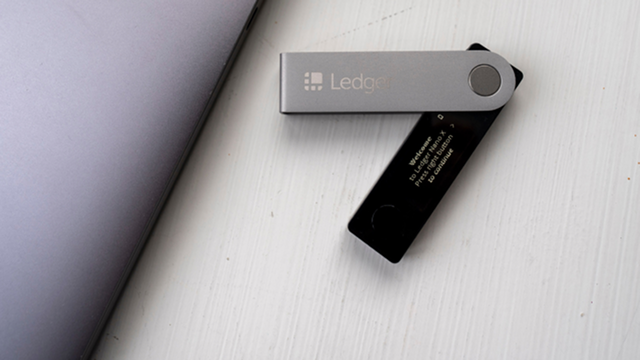
Hardware wallet manufacturer Ledger is evaluating a New York listing following triple-digit million revenues in 2025 driven by escalating cryptocurrency security threats. CEO Pascal Gauthier told the Financial Times the Paris-based company is experiencing record performance as individuals and institutions prioritize cold storage solutions.
Capital for crypto businesses is concentrated in New York rather than Europe, Gauthier stated, explaining his increased time spent in the city. The company plans to raise funds next year through either private rounds or U.S. public markets while expanding its New York presence. Ledger was valued at $1.5 billion in 2023 with backing from 10T Holdings and True Global Ventures.
The firm secures approximately $100 billion in Bitcoin for customers and anticipates seasonal demand spikes during Black Friday and Christmas shopping periods. Revenue growth coincides with record theft activity as hackers stole $2.2 billion in digital assets during the first half of 2025, exceeding 2024's full-year total according to Chainalysis data.
Individual wallets accounted for 23% of successful attacks, the Financial Times reported, citing the blockchain analytics firm. Gauthier warned that hacking that targets both bank accounts and crypto holdings will intensify in the coming years as criminals deploy increasingly sophisticated methods.
Physical violence targeting crypto holders has also escalated, including the January kidnapping of Ledger co-founder David Balland. Criminals demanded 10 million euros in cryptocurrency ransom and severed one of Balland's fingers before a 24-year-old French-Moroccan suspect was arrested in Tangier, Morocco, for orchestrating multiple high-profile crypto kidnappings in France.
Ledger competes with Czech Republic-based Trezor and Switzerland-based Tangem in the expanding secure storage market. The company maintains a leading market position despite competition and recently launched iOS enterprise applications plus native TRON support.
Last month's multisignature interface launch drew a mixed community response. Technical improvements received praise, but the fee structure, including $10 flat fees per transaction and 0.05% variable fees for token transfers, sparked criticism. Developer pcaversaccio accused Ledger of abandoning Cypherpunk principles by creating centralized revenue extraction mechanisms.
The backlash highlights tension between commercial expansion and crypto community expectations around decentralization and minimal fees. Ledger's growth trajectory and fundraising plans signal confidence in sustained hardware wallet demand despite ongoing debate over its fee implementation and platform control approaches.
This article contains links to third-party websites or other content for information purposes only (“Third-Party Sites”). The Third-Party Sites are not under the control of CoinMarketCap, and CoinMarketCap is not responsible for the content of any Third-Party Site, including without limitation any link contained in a Third-Party Site, or any changes or updates to a Third-Party Site. CoinMarketCap is providing these links to you only as a convenience, and the inclusion of any link does not imply endorsement, approval or recommendation by CoinMarketCap of the site or any association with its operators. This article is intended to be used and must be used for informational purposes only. It is important to do your own research and analysis before making any material decisions related to any of the products or services described. This article is not intended as, and shall not be construed as, financial advice. The views and opinions expressed in this article are the author’s [company’s] own and do not necessarily reflect those of CoinMarketCap.