First Deputy Governor Vladimir stated the central bank is considering removing the super-qualified investor requirement for buying and selling crypto with actual delivery.

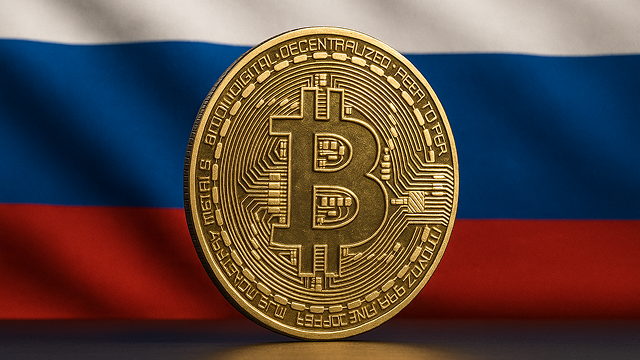
Russia Crypto News
The Bank of Russia is discussing easing cryptocurrency regulations to expand access beyond the wealthiest Russians as the country seeks alternative methods for international transactions using digital currencies.
First Deputy Governor Vladimir Chistyukhin stated the central bank is considering removing the super-qualified investor requirement for buying and selling crypto with actual delivery. He noted the importance of providing additional payment options for international transactions.
Chistyukhin stated that easing crypto rules is particularly relevant as Russia explores new channels for cross-border payments. He expects the central bank to reach an agreement with the Ministry of Finance on this issue by the end of December.
The super-qualified investor classification, created earlier this year, requires wealth and income thresholds exceeding 100 million rubles or an annual income of at least 50 million rubles, roughly $1.3 million and $600,000, respectively. This limits access to cryptocurrencies for transactions or investment to only the wealthiest few in Russian society.
Russia banned the use of cryptocurrencies for payments in the summer of 2020. The potential regulatory shift represents a significant reversal as authorities recognize that digital assets may provide alternative channels for international transactions.
The central bank previously took a cautious approach toward cryptocurrency adoption, but appears to be reconsidering its position as global payment infrastructure evolves. Chistyukhin emphasized that crypto assets may become a normal instrument, noting they are already being employed as such in Russia.
In March of this year, the Bank of Russia proposed implementing an experimental legal regime for operations with cryptocurrencies. Under this framework, Russian companies can use digital coins in cross-border settlements, while super-qualified investors can purchase and trade crypto assets.
In May, the Bank of Russia authorized the offering of derivative instruments based on cryptocurrencies on the domestic market by issuing a special circular for financial institutions. These products remain available only to investors who have been recognized as highly qualified.
The central bank recently admitted that household investments in Russian crypto derivatives remain relatively low, at a little over $47 million. In October, the regulator decided to allow commercial banks to operate with digital assets and urged lawmakers to adopt comprehensive legislation regulating crypto investments.
In November, the Bank of Russia announced it intends to allow mutual funds to invest in crypto derivatives and recently proposed the necessary draft amendments. The moves signal a broader shift toward integrating digital assets into Russia's financial system.
Chistyukhin stated the central bank is in close dialogue with the Ministry of Finance and expects to express their position publicly by year-end. The regulatory changes could arrive quickly once an agreement is reached between the two agencies, potentially opening cryptocurrency access to millions of Russian citizens currently excluded by existing wealth requirements.
This article contains links to third-party websites or other content for information purposes only (“Third-Party Sites”). The Third-Party Sites are not under the control of CoinMarketCap, and CoinMarketCap is not responsible for the content of any Third-Party Site, including without limitation any link contained in a Third-Party Site, or any changes or updates to a Third-Party Site. CoinMarketCap is providing these links to you only as a convenience, and the inclusion of any link does not imply endorsement, approval or recommendation by CoinMarketCap of the site or any association with its operators. This article is intended to be used and must be used for informational purposes only. It is important to do your own research and analysis before making any material decisions related to any of the products or services described. This article is not intended as, and shall not be construed as, financial advice. The views and opinions expressed in this article are the author’s [company’s] own and do not necessarily reflect those of CoinMarketCap.